


Telemedicine is a subset of telehealth that features remote health services for patients with the intention of making healthcare more accessible, efficient, and affordable. Since the Covid-19 pandemic, governments and organizations have heavily increased funding and research for telemedicine. With new advancements in technology, the use of telemedicine naturally grew with it, but several issues with telemedicine, such as the cost of equipment, the need for funding, and the coordination of patients and providers, still remain. While telemedicine has been growing in usability years before the pandemic, new management using artificial intelligence can help automate and condense the information of patients, namely with remote home medical care.
Even Though Telemedicine is Considered Modern, it has a Long History Spanning Over a Century
Since telemedicine’s definition is vague, scholars dispute the exact starting point of “virtual home care,” but they generally believe it to be in the early twentieth century. However, the foundations for telemedicine began in the nineteenth century. With the invention of the telephone in 1876 by Alexander Graham Bell, communication spread rapidly. Naturally, doctors who were accustomed to visiting patients in their homes took advantage of this. In 1879, the Lancet, a weekly publication journal that posited new medical treatments, released an article that advocated for the implementation of the telephone in formal healthcare.
As the telephone, and later the radio, made further advancements, remote medical care seemed more plausible for doctors. One of the easiest uses of the radio was in the 1920s with ships. When sailors and their crews went on voyages for weeks or months, they connected with physicians via two-way radio communications. In the 1960s, when the United States first began using telehealth, Alaska had been an eager adopter due to their geographical limitations. Small villages could communicate with larger cities to decide if patients needed to receive further treatment in their main hospitals.
The first practice to widely adopt telemedicine were radiologists, who could receive and examine images on computers beginning in 1980. Given that their profession did not require them to be in-person, they could work in remote areas while diagnosing fractures and recommending treatments. However, once the internet was invented, technological advancements increased exponentially, and telemedicine rose in popularity in all practices.
Telemedicine Struggled to Get Attention Before the Covid-19 Pandemic
Before the Covid-19 pandemic in March of 2020, telemedicine was rising slowly, but new amendments around 2018 encouraged its adoption by hospitals and physicians. In 2016, 11.2 percent of doctors and hospitals used telemedicine specifically when meeting with or evaluating patients. However, by 2018, over 76 percent of hospitals in the United States adopted this technology to some degree (HealthAffairs, Vol. 37, No. 12). At this time, doctors used telemedicine to monitor patients through observation and IVs, but they were also expanding its implementation outside of hospitals.
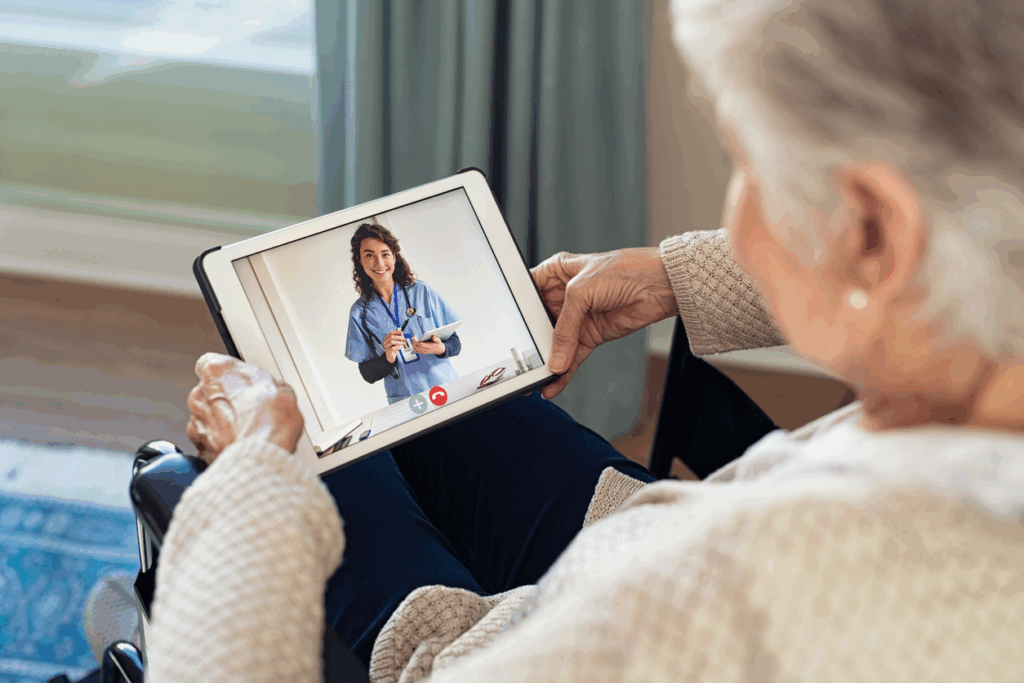
The majority of patients would continue to physically arrive to their appointments, but those unfit to drive, such as the elderly or people recovering from surgery, could take advantage of this technology. Even so, the main obstacle at the time was the requirement of technology in hospitals or at home. Hospitals were 33 percent more likely to use telemedicine when online programs integrated into their systems easily, but they refused to attempt programs that were not compatible (Liebertpub, Vol. 26, No. 4).
In patients’ homes, the difficulty of online platforms depended on how comfortable the patient was with the technology. This would continue to be a major problem with telemedicine. Complaints were consistent, with routine updates and log-ins being the most agitating. In about 20 percent of cases, patients—primarily elderly and postoperative—still required in-home physicians for additional support (JAMA Netw Open, Vol. 5, No. 8). Additional concerns included security, the legitimacy of their providers, and some costs, since insurance companies slowly began to cover telemedicine. Despite these obstacles, new amendments, convenience, and the general affordability of telemedicine helped it grow steadily in adoptability. However, the Covid-19 pandemic would force it to rise as the primary healthcare system.
If not for Covid-19, Telemedicine would have Failed
During the Covid-19 pandemic, beginning in 2020 in the United States, telehealth and telemedicine became one of the only ways patients could reach their doctors. In the three month period from March of 2020 to May, telemedicine use had increased by 766 percent. This caused a rapid increase in the amount of data that these online systems were receiving (JAMA Netw Open, Vol. 4, No. 3). Smaller telehealth systems failed to compete with larger companies, but even the largest businesses struggled. With the varying levels of individual care that each patient needed, the current capabilities of telemedicine were insufficient.

The pandemic was the most impactful towards the elderly and postoperative patients who still required in-home physicians. In these cases, current telemedicine systems were unable to fill their specific needs. Through the first three months of the pandemic, telemedicine companies tried to adapt as quickly as possible, but several issues prevailed. For instance, a clear social, demographical, and geographical divide was especially prominent with areas outside of the United States.
Outside of the United States, access to telemedicine is much more difficult. The need for fully grasping the costs and potential of telemedicine was apparent, and future funding efforts would not solve this. As for the coronavirus itself, telemedicine’s capabilities to monitor and treat patients greatly helped its popularity. Hospitals and medical practitioners quickly adopted telemedicine as it gained more publicity and its benefits were realized. While hospitals used telemedicine much more than doctors coming into the pandemic, 78.6 percent of hospitals compared to over 86 percent of physicians regularly use telemedicine in 2024, a shift most easily seen during quarantine (Definitive Healthcare, 2024).
The People who Needed Telemedicine the Most Struggled the Most in Receiving it
The most evident advantage to virtual healthcare during the pandemic was that it prevented the spread of the virus, but the efficiency of each system was problematic. As previously mentioned, older patients had difficulty with setting these digital platforms up, and they required the most medical attention. Since the coronavirus disproportionately affected people over 65, the people who needed treatment the most struggled to receive it. Additionally, the requirement for them to record their own conditions led many to choose in-person visits with their doctor. Patients unable to be in-person, such as postoperative patients, had much greater difficulty in receiving care, especially with several moving parts that can seem overwhelming. In short, the Covid-19 pandemic exposed the issues that telemedicine had. With funding, many of these problems could be alleviated, but not thoroughly solved.
Even With Telemedicine, Legacy Problems Persist
Although telemedicine use naturally decreased after quarantine, healthcare providers and researchers better understood its benefits and continued to use it as a viable option. Therapists and psychiatrists could extend their services much farther than usual, needing only a computer and the internet to work. Their patients too would be more efficient with their time, joining a meeting in the comfort of their homes. However, the patients who needed telemedicine the most, either for routine check-ups or evaluations, still faced the same problems from the pandemic.
The coordination of both the patient and doctor is crucial, and confusion from either side can cause dissatisfaction for the user or delay in the physician’s workflow. New advancements in technology and artificial intelligence have the opportunity to improve efficiency and satisfaction of both parties. Artificial intelligence can solve the problems that were apparent during the pandemic: the overload of data during the first few months of the pandemic would be better managed with the help of AI, and each patient can receive more personalized care, which will be elaborated on later.
Even Acknowledging the Benefits, Some People Resist Telemedicine
Despite the capabilities of current technology, some computer systems—mainly online platforms—require considerable resources. A significant problem with telemedicine is the complete integration in established healthcare systems, since concerns with privacy and access to technology will continue to be prevalent, regardless of artificial intelligence’s capabilities. Certain aspects of monitoring that are essential for telemedicine’s full potential can be felt as degrading or an invasion of privacy for patients. This resistance from users who can benefit from telemedicine the most is a core issue that technology cannot resolve. Even so, developments in artificial intelligence can help reduce workload while preserving some human elements. With joint support from the government and healthcare industries, technology can improve telemedicine to make it more inclusive, effective, and accessible, but numerous challenges will still remain.
Unless Something Changes, Telemedicine Cannot Survive Internationally
One of the most apparent issues with telemedicine as it grew in popularity was its implementation in countries outside of the United States. While telemedicine seems like the obvious solution towards making a uniform standard of healthcare, in practice it faces many obstacles. In developing countries, access to the internet and a working computer can be challenging. However, the need for telemedicine is extremely high in these contries, since the number of doctors cannot meet the current requirement for care.
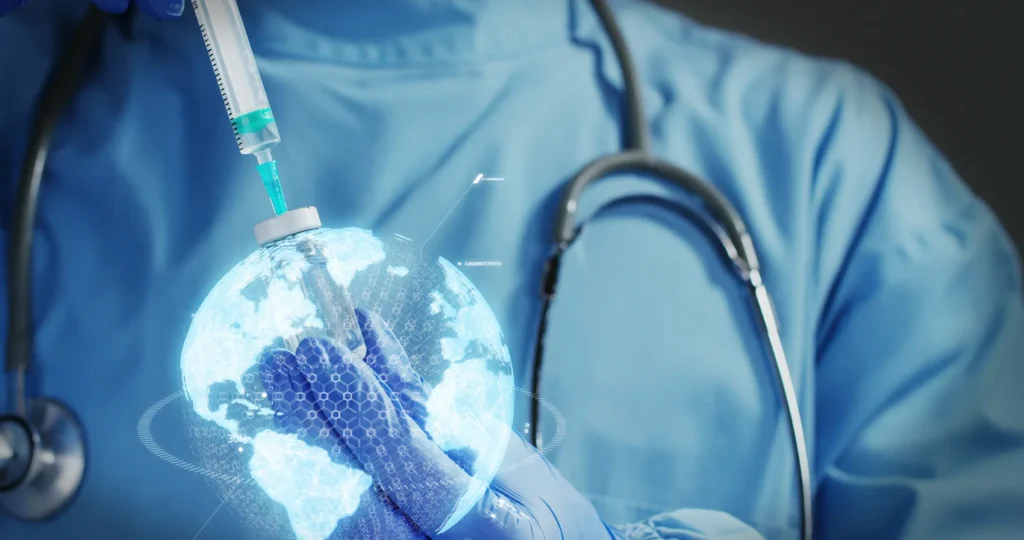
As of 2022, according to the World Health Organization, there were roughly 17.2 doctors per 10,000 people in the world. The United States has nearly double that amount, but in general, the African continent has 2.6 doctors per 10,000 people. In a situation in which one doctor should account for over 3800 people, the need for telemedicine is strongest. The physician could be able to diagnose and meet patients far away from them and much more efficiently.
However, this technological barrier is accompanied with a reluctance towards telemedicine, mainly because of cultural barriers or skepticism towards physicians’ credibility. Language barriers and differences in tradition can divide the doctor from the patient. For example, Africa has countless languages and ethnic groups that are separated by arbitrary country borders. With each country adopting a different policy towards telemedicine, the degree and attitude of treatment can vary substantially. This divide in developing countries makes the issues with telemedicine much more difficult to solve, as previously discussed. Additionally, the lack of standard operating procedures in telemedicine can make doctors hesitant to treat patients online. Fears of malpractice often outweigh their desire to make their practices more efficient.
Not only is the Technological Barrier Great, but so is the Cost, both Economically and Socially
The costs of telemedicine for developing countries are very high, and with their reluctance to adopt telemedicine, the majority of these countries will continue to not use telemedicine. Finding the balance between licensing doctors and maintaining the current standards is necessary towards implementing telemedicine correctly. Even so, the obstacle of each country’s policy towards healthcare makes a uniform standard for physicians much harder, which reintroduces skepticism towards doctors. The patient must not only trust their physician but also believe that remote healthcare remains beneficial compared to in-person treatment. As the United States continues to implement telemedicine across its own country, its use of artificial intelligence and improved technology. Although this can give the United States greater advancements, it has the cost of leaving developing countries behind. The benefits that current technology may contain will never be capitalized on so long as the cost of telemedicine and skepticism remains high.
Telemedicine’s Greatest Obstacle is Ourselves
If done correctly, telemedicine can make considerable strides in treating patients, both with patient comfort and physician efficiency, but concerns and suspicions towards the monitoring aspect of telemedicine remains a significant hindrance. Because of improved video quality and patient-recording devices, remote home monitoring recently became a viable option for patients. Although people have used wearable devices for nearly eighty years, beginning with the Holter monitor in 1949, the devices offered incredibly limited capabilities. The Holter monitor was designed to track the electric activity of the heart by recording the heart’s rhythms. Instead of tracking patients while in the hospital, doctors were able to utilize the Holter monitor, which was relatively simple to put on, by asking their patients to use it while they slept and record their symptoms themselves.
Today, manufacturers design countless new devices to record patients’ vitals, such as blood pressure and temperature. However, technology now allows for much further advancements in patient treatment, and monitoring especially capitalizes on this. While all patients have access to home monitoring, physicians primarily use it for postoperative and elderly patients. As previously elaborated on, these patients can struggle with setting up equipment, but the concerns with technology is also problematic. Having their movements, vitals, and habits constantly monitored can feel invasive and even humiliating for patients, particularly for patients who are accustomed to freedom and self-reliance.
Do these Issues only Apply to Elderly Patients?
Naturally, many people are hostile to home monitoring systems, which makes its adoption much more difficult. Despite this, future generations more comfortable with technology will be able to display the benefits of monitoring. For example, its nearly immediate detection of health problems, its suitability with electronic health records, and its potential of patient oriented treatment would be easier shown with more willing subjects. Concerns with privacy and security will remain, however, as the spread of misinformation alongside legitimate authenticity problems grows. A study led by Shannon H. Houser featured the close examination of 305 articles regarding telemedicine and remote home monitoring. In it, the majority of challenges with telemedicine involved the privacy and security of the systems, but the wariness towards this technology featured concerns from all age groups, proving that these doubts are not limited to elderly patients.
Can AI Fix What’s Wrong with Telemedicine?
As previously mentioned, artificial intelligence can solve the issues that the pandemic brought into light. Although the potential of artificial intelligence has been referenced and praised as the solution for telemedicine’s problems, many people struggle to understand what artificial intelligence can do concretely. In short, AI can optimize the workflow and data that medical systems receive and improve patient experience through personalized healthcare treatment.
As previously mentioned, the sudden increase in user data that the Covid-19 pandemic brought overloaded and crowded many healthcare systems. In situations like these, artificial intelligence would be able to manage, sort, and analyze each patient much faster than older computer systems could. This also lessens the strain on the doctor’s workload, because artificial intelligence can organize their patients’ charts and immediately recognize aberrations from their usual patterns. Following a virtual meeting with a patient, artificial intelligence can transcribe and create summaries of the visit for the doctor. Not only does this save the physician’s time, but it also provides them with easy access to notes that they can refer to afterwards.
AI can Make Systems more Efficient, but Doctors Play a Key Role
Despite these capabilities, several tasks, such as visual check-ups or mental health diagnoses, necessitate experienced doctors to complete. Without previous records, artificial intelligence could not determine the mental state of patients or unusual patterns in their physical appearance. Therefore, artificial intelligence will be unable to complete replace humans in the medical field, since a crucial part of telemedicine revolves around the physician. However, doctors and healthcare providers can use artificial intelligence to improve patients’ lives as well. According to Leona Rajaee, Elation’s content manager, a primary care physician that works full time will be responsible for an average of 2,500 patients in the United States. With such a large number of patients, each one with different preferences, some degree of customization will be lost.
Using artificial intelligence, medical systems can weave together each strand of information about a patient, and it can be trained to suggest a variety of treatments based on the user. By creating a personalized patient plan, artificial intelligence can make medical care more adaptable to each patient while being more straightforward for the physician. Currently, funding is the largest obstacle in AI growth. With each advancement in technology, much more research is required to fully implement them. As for telemedicine, artificial intelligence could be able to maximize efficiency for the physician and comfortability for the patient, but artificial intelligence in a broader sense has unknown capabilities that might lead to even greater implications moving forward.
Moving Forward, can we Save Telemedicine?
In theory, telemedicine and telehealth are excellent tools that can bring affordable healthcare across the world, but in practice, it is insufficient. The concept of telemedicine in the form of competing companies results in businesses prioritizing the technology over the patients. If every obstacle discussed earlier is solved, such as resistance to telemedicine and its lack of implementation in developing countries, several issues will remain, because telemedicine itself is flawed. Especially in the context of capitalism, telemedicine companies compete much more than they collaborate with each other. In order to set themselves apart from other companies, telemedicine systems will make themselves different from each other, which makes the transition from system to system much more difficult for clinics and patients. When a hospital decides that their current system is insufficient, or lacking, in any way, they will have to move to a newer system that will probably be incompatible.
Hospital staff spend many hours and much effort adapting to new telemedicine programs. Although they try to use the system at its highest potential, the transition significantly reduces the hospital’s efficiency. While artificial intelligence continues to develop, a new solution may eventually be invented to address these problems, making telemedicine systems fully compatible with each other and focusing on ideal treatments for patients. However, until this arguably quixotic solution is realized, the vast majority of efforts in telemedicine may be wasted.
Sources
- Image- “4 Benefits of Telemedicine for Seniors.” ChenMed, 13 Dec. 2022, ChenMed, https://www.chenmed.com/blog/4-benefits-telemedicine-seniors.
- Services, Board on Health Care. “The Evolution of Telehealth: Where Have We Been and Where Are We Going?” The Role of Telehealth in an Evolving Health Care Environment: Workshop Summary., U.S. National Library of Medicine, 20 Nov. 2012, www.ncbi.nlm.nih.gov/books/NBK207141/.
- Gali, Carylee. “History of Telemedicine.” Curogram, 8 Feb. 2022, curogram.com/blog/history-of-telemedicine.
- Kane, Carol K., and Kurt Gillis. “The Use of Telemedicine by Physicians: Still the Exception Rather than the Rule | Health Affairs Journal.” HealthAffairs, Dec. 2018, www.healthaffairs.org/doi/10.1377/hlthaff.2018.05077.
- Huilgol, Yash S., et al. “Liebertpub.” Hospital Telehealth Adoption Increased in 2014 and 2015 and Was Influenced by Population, Hospital, and Policy Characteristics, 16 Apr. 2020, www.liebertpub.com/doi/pdf/10.1089/trgh.2019.0029.
- Levine DM, Paz M, Burke K, et al. Remote vs In-home Physician Visits for Hospital-Level Care at Home: A Randomized Clinical Trial. JAMA Netw Open. 2022;5(8):e2229067. doi:10.1001/jamanetworkopen.2022.29067.
- Image- “Telemedicine and CV Training during the COVID-19 Pandemic.” Edited by Anudeep Dodeja, American College of Cardiology, 14 Apr. 2020, www.acc.org/Membership/Sections-and-Councils/Fellows-in-Training-Section/Section-Updates/2020/04/13/12/42/Telemedicine-and-CV-Training-During-the-COVID-19-Pandemic.
- Weiner JP, Bandeian S, Hatef E, Lans D, Liu A, Lemke KW. In-Person and Telehealth Ambulatory Contacts and Costs in a Large US Insured Cohort Before and During the COVID-19 Pandemic. JAMA Netw Open. 2021;4(3):e212618. doi:10.1001/jamanetworkopen.2021.2618.
- Jnr., Bokolo Anthony. “Use of Telemedicine and Virtual Care for Remote Treatment in Response to COVID-19 Pandemic – Journal of Medical Systems.” SpringerLink, Springer US, 15 June 2020, link.springer.com/article/10.1007/s10916-020-01596-5#Abs1.
- “Hospital Telehealth Adoption by State.” Definitive Healthcare, Definitive Healthcare, 12 Feb. 2024, www.definitivehc.com/resources/healthcare-insights/hospital-telehealth-adoption-by-state#:~:text=According%20to%20hospital%20technology%20implementation,have%20installed%20a%20telemedicine%20solution.
- Portnoy, Jay, and Morgan Waller. “Telemedicine in the Era of COVID-19.” Edited by Tania Elliott, JACL in Practice, May 2020, www.jaci-inpractice.org/article/S2213-2198(20)30249-X/fulltext.
- Toosi, Reza, et al. “Telemedicine: An AI Solution, at Last?” ResearchGate, July 2025, www.researchgate.net/publication/393460473_Telemedicine_An_AI_solution_at_last?enrichId=rgreq-59a1a5fb634b4d37081d8a11ddc54c27-XXX&enrichSource=Y292ZXJQYWdlOzM5MzQ2MDQ3MztBUzoxMTQzMTI4MTUzMzA1MzIxMEAxNzUxODc3NDk0MTkz&el=1_x_2&_esc=publicationCoverPdf.
- Elvas, Luís B., et al. “Bio-Inspired Computing.” Google Books, Google, books.google.al/books?hl=en&lr=&id=Gi5gEQAAQBAJ&oi=fnd&pg=PA61&dq=remote%2Bhome%2Bmedical%2Bcare%2Bwith%2BAI&ots=6dz1e7_grE&sig=A3mb9cVBOR36ouZbWxyyD2iAAV4&redir_esc=y#v=onepage&q=remote%20home%20medical%20care%20with%20AI&f=true. Accessed 26 July 2025.
- Wang, Chang-Yueh, and Fang-Suey Lin. “Ai-Driven Privacy in Elderly Care: Developing a Comprehensive Solution for Camera-Based Monitoring of Older Adults.” MDPI, Multidisciplinary Digital Publishing Institute, 14 May 2024, www.mdpi.com/2076-3417/14/10/4150.
- Image- International Telehealth Roundtable – Center for Global Engagement, www.umaryland.edu/global/global-events/past-global-events/international-telehealth-roundtable.php. Accessed 2 Oct. 2025.
- Bali, Surya. “Barriers to Development of Telemedicine in Developing Countries.” IntechOpen, IntechOpen, 5 Dec. 2018, www.intechopen.com/chapters/64650.
- Combi, Carlo, et al. “Telemedicine for Developing Countries.” Applied Clinical Informatics, Schattauer GmbH, 18 Dec. 2017, www.thieme-connect.com/products/ejournals/html/10.4338/ACI-2016-06-R-0089.
- World Health Organization 2025 data.who.int, Density of physicians (per 10 000 population). https://data.who.int/indicators/i/CCCEBB2/217795A.
- Houser, Shannon H, et al. “Privacy and Security Risk Factors Related to Telehealth Services – A Systematic Review.” Perspectives in Health Information Management, American Health Information Management Association, 10 Jan. 2023, pmc.ncbi.nlm.nih.gov/articles/PMC9860467/#sec1_1.
- Lindquist, Margaret. “Remote Patient Monitoring Is Transforming Healthcare.” What Is Remote Patient Monitoring (RPM)?, 1 Apr. 2025, www.oracle.com/health/remote-patient-monitoring/#benefits.
- Cleveland Clinic. “What Is a Holter Monitor?” Cleveland Clinic, 17 June 2025, my.clevelandclinic.org/health/diagnostics/21491-holter-monitor.
- Rajaee, Leona. How Many Patients Does a Doctor Have a Day?, 27 Mar. 2025, www.elationhealth.com/resources/blogs/how-many-patients-does-a-doctor-have-a-day.
- Image- Industrytech. “The Digital Doctor Is in: Ai and Telemedicine Redefine Healthcare.” Industry Tech Insights –, 23 Jan. 2025, industrytechinsights.com/the-digital-doctor-is-in-ai-and-telemedicine-redefine-healthcare/.
- Shaver, Julia. “The State of Telehealth before and after the COVID-19 Pandemic.” Primary Care, U.S. National Library of Medicine, Dec. 2022, pmc.ncbi.nlm.nih.gov/articles/PMC9035352/#abs0010.
- Redding, Heather. How to Overcome Common Patient Concerns toward Telehealth Apps, 28 Jan. 2021, www.adsc.com/blog/patient-concerns-toward-telehealth-apps.

Leave a Reply